Alien Invasion: RPG Idle Space
- 4.3
- Rating
- 10.00M
- Installs
- Free
- Price

 Analysis by App-foxy
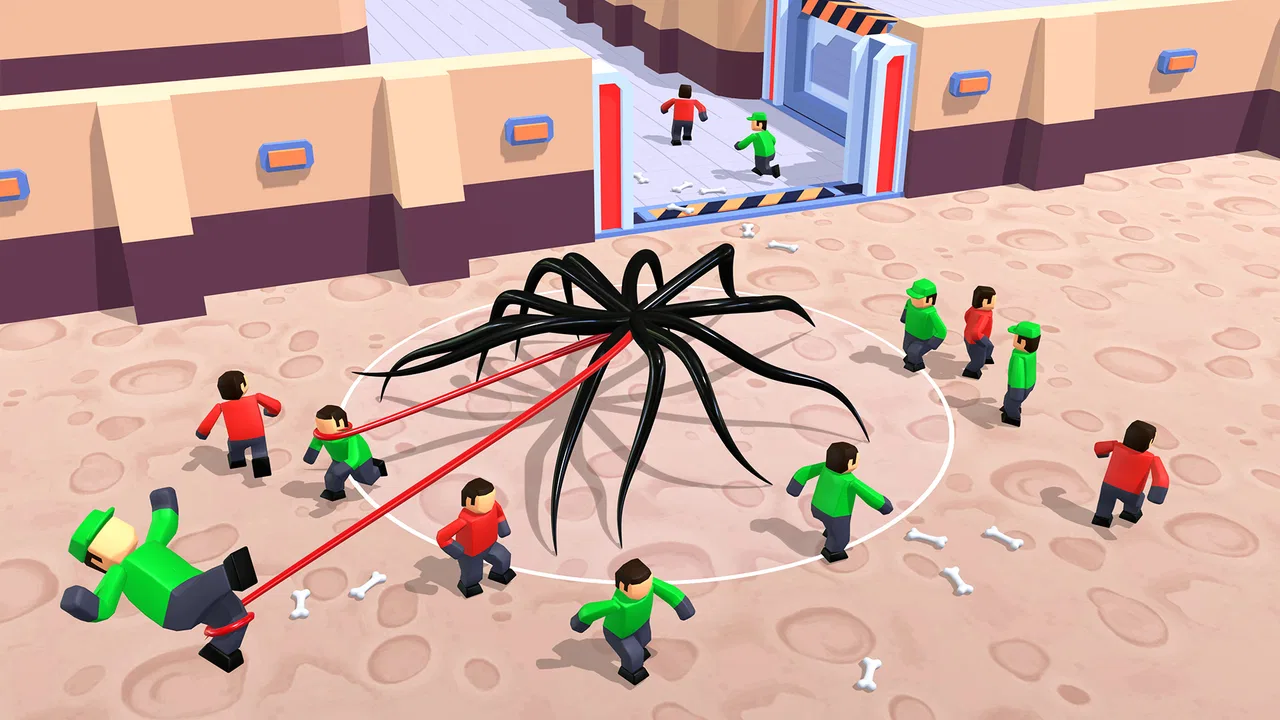
I spent time with Alien Invasion: RPG Idle Space expecting a simple arcade distraction, but its appeal is more specific than that. It mixes direct movement, enemy survival, character growth, and idle-style progress into a loop that is easy to understand in a few minutes and surprisingly comfortable to revisit throughout the day. You guide an alien through hostile encounters involving ghosts and zombies, collect the rewards that keep the character improving, and decide how actively you want to play each session.
That balance is the reason I can see myself recommending it to someone who wants a game that works in short bursts rather than demanding a long uninterrupted campaign. It is free to start, belongs to the arcade category, and is made by CrazyLabs LTD. The presentation is approachable enough for casual players, while the upgrade rhythm gives experienced players something to optimize. Still, it is not a traditional role-playing game with deep storytelling or a carefully built world. Its strongest qualities are its repeatable action and low commitment, not narrative complexity.
How the basic play loop feels in everyday use
The first thing I noticed is how quickly the game communicates its purpose. You are not asked to learn a complicated control scheme before seeing the action. The alien is placed in danger, enemies create pressure, and survival becomes the immediate objective. That clarity makes it well suited to moments when I have only a few minutes, such as waiting for a train, taking a break between tasks, or winding down before bed.
You May Also Like

 Blood Strike: 2.5 Anniversary
Blood Strike’s Loadouts Turn Every Drop Into a Tactical Gamble
A close look at Blood Strike’s custom loadouts: how fast access to signature weapons reshapes its battle royale rhythm, rewards preparation, and narrows the gap between fights.

 Pandora - Music & Podcasts
Pandora’s Music Is Easy to Start, but Harder to Recover
Pandora’s strength is its low-effort path from a seed to a station. Its weak spot is how much confidence it asks you to place in connection, setup, and quiet recovery.

 8 Ball Pool
 Is Built on Rivalries, Rematches, and Routine
A close look at the rivalries, rematches, shared routines, and unanswered safety questions that turn a quick pool match into a persistent mobile community.

 Samsung Music
’s Quiet Strength Is Playing What You Already Own
Its reach comes less from spectacle than from dependable access to a personal library. That simplicity is both the app’s strongest retention engine and its ceiling.

 AccuWeather: Weather Radar
AccuWeather Review: A Quick, Clear Forecast for Everyday Decisions
For everyday plans, the best forecast is the one you can understand quickly. AccuWeather makes rain timing, radar, and local conditions easy to act on, with a few trade-offs.

 Hill Climb Racing
Why Hill Climb Racing Still Turns Crashes Into One More Run
A tiny car, a bumpy hill and one more upgrade: Hill Climb Racing keeps resurfacing because its simple chaos makes every near-miss feel personal.
More From Our News Desk
View All News


My usual baseline workflow is simple: I start a run, concentrate on movement and threats, collect whatever progress the session offers, then spend the resulting resources before starting again. That last step matters. The game feels more satisfying when I treat upgrades as part of the routine instead of ignoring them and repeatedly entering encounters with an underdeveloped character.
The idle element changes how I judge a session. I do not need every minute to be filled with manual input for the game to feel worthwhile. I can make progress, leave, and return later to continue improving the alien. At the same time, the active portions still matter because surviving danger is more engaging when I am paying attention. The result is a middle ground between a hands-on arcade game and a passive progression title.
The most useful habit is to separate “playing for survival” from “playing for upgrades.” During a dangerous section, I focus on positioning and avoiding unnecessary trouble. Afterward, I review the character’s development rather than spending resources impulsively in the middle of a hectic moment. This makes the loop feel less chaotic and helps me understand whether my next improvement should support endurance, damage, or general progress.
The game is also forgiving in the way many mobile arcade experiences need to be. I can pick it up without remembering a long quest chain or a complex inventory arrangement. That makes it a good companion for short sessions, but it also means players looking for a large, constantly changing adventure may find the structure repetitive. The pleasure comes from refining a cycle, not from discovering a completely new activity every time.
What to check before settling into the routine
Before playing seriously, I recommend opening the available settings and checking how the game behaves on your device. The exact options can vary with the current build and platform, so I would not assume that every phone presents the same controls. What matters is finding the choices that affect comfort: sound, notifications, control response, and any option that changes how the game handles idle progress or interruptions.
Sound is worth considering first. The action can become busy, and some players will enjoy the feedback while others will prefer to play quietly with their own music or a podcast. I often lower game audio when using the title as a background activity. That makes it easier to treat a short session as part of a daily routine rather than as something that takes over the room.
I also pay attention to how the game feels after switching away and returning. Because idle progress is part of the appeal, the practical question is not only whether a run is enjoyable, but whether the return process is clear and convenient. If I am checking it during a lunch break, I want to understand what happened while I was away and what action will produce the best next step without spending several minutes searching through menus.
Another useful check is the device’s notification behavior. If alerts become too frequent, the game can feel like a chore instead of a relaxing arcade option. I prefer to allow reminders only when they genuinely help me return to a worthwhile activity. Anyone who dislikes interruptions should review the phone’s notification controls early rather than blaming the game for a problem that can often be reduced at the system level.
The age guidance is Everyone 10+, which is a useful signal for families deciding whether the tone fits a younger player. The ghost and zombie theme gives the game a spooky action flavor, even though the overall experience remains rooted in colorful, accessible arcade play. I would still preview it with a child who is sensitive to monsters or repeated combat, because age labels do not describe every player’s personal comfort level.
On the technical side, the game supports Android 7.0 and later. That makes it available to people using older compatible devices, although actual smoothness will depend on the phone and what else is running. I would close demanding background apps before a longer session, especially on an older handset. This is not a game I would choose to test the limits of a very modest phone while many other apps are active.
Small habits that make progress feel faster
Experienced play here is less about discovering secret commands and more about repeating sensible decisions. I try not to spend every reward immediately. Instead, I look at the next obstacle in my current routine and choose an improvement that addresses the problem I am actually experiencing. If I am surviving but taking too long to clear threats, an offensive improvement is more useful than automatically selecting the first available option. If I am being overwhelmed, durability becomes the more sensible priority.
This approach prevents a common mobile-game mistake: upgrading according to the order in which buttons appear. The most visible choice is not always the most valuable one. I get better results when I make a quick note of what ended the previous attempt. Was I surrounded? Was progress slow because enemies took too long to defeat? Did I lose focus because the session lasted longer than expected? Those answers guide the next decision more reliably than a general urge to make everything slightly better.
I also use short, repeatable sessions instead of forcing one long play period. A brief run lets me evaluate a change without mixing too many variables together. If I improve the alien and immediately play for a long time, it is harder to tell whether the result came from the upgrade, luck, or simply paying closer attention. Short tests make the progression system easier to read.
Movement discipline is another overlooked advantage. In arcade survival games, panic often creates more danger than the enemies themselves. I try to keep enough open space around the alien rather than rushing toward every reward at once. When the screen becomes crowded, survival takes priority over perfect collection. Missing a small opportunity is usually less damaging than trapping the character in a bad position.
That habit is especially helpful for people who play one-handed on a phone. I prefer to keep my thumb movements small and deliberate, using the broadest safe route rather than making dramatic swipes. The exact feel depends on the device, but the principle remains useful: predictable movement reduces accidental exposure and makes the game less tiring during repeated attempts.
For idle-focused play, I treat returning rewards as a planning opportunity rather than a reason to rush into another run. I collect the progress, review the upgrade choices, and then decide whether I have enough attention for active play. If I am distracted, I would rather make a modest improvement and stop than begin a run I cannot properly manage. This keeps the game enjoyable instead of turning it into another obligation.
There is also a practical trade-off between convenience and control. Idle progress is excellent when I want something low pressure, but active play gives me more influence over immediate survival. Players who always leave the game running may enjoy the relaxed rhythm but miss the satisfaction of making careful movement choices. Players who control everything manually may progress more deliberately but lose the reason this title is comfortable for busy schedules.
Where the RPG label helps and where it falls short
The role-playing elements are most convincing in the progression loop. The alien becomes stronger over time, and the repeated cycle of surviving, earning, and improving gives each return a purpose. I enjoy having a clear reason to replay an encounter rather than simply chasing a high score with no lasting consequence.
However, I would not approach this expecting the breadth of a conventional RPG. The game’s identity is closer to an arcade survival experience with character development than to a story-heavy adventure. Someone who wants dialogue, party management, elaborate exploration, or a large world should look elsewhere. The “RPG” part supports the action; it does not replace it with a deep role-playing simulation.
The same distinction helps when comparing it with usual alternatives. A pure arcade game may offer tighter moment-to-moment challenge but no meaningful long-term improvement. A conventional idle game may provide more passive growth but less reason to pay attention during a run. This title sits between those extremes. It is a better fit than either alternative for someone who wants occasional control with progress that continues to matter later.
Compared with a story-driven mobile RPG, it is quicker to understand and easier to pause mentally, but it gives up narrative motivation and variety. Compared with a traditional endless survival game, it offers more progression structure, though players who value a clean score-chasing experience may find the upgrade layer distracting. The right choice depends on whether you want a compact loop or a larger adventure with more systems.
Limits, purchases, and the point where patience matters
The free entry is a major advantage because I can test the core loop without committing money. There are in-app purchases ranging from $0.99 to $119.99 per item, so I would approach the store carefully and decide in advance whether optional spending fits my budget. The wide range means the game can remain free for a casual player while still presenting purchase choices that deserve attention.
My advice is to play long enough to understand the normal progression before buying anything. Otherwise, it is difficult to tell whether a purchase solves a genuine frustration or simply shortens a loop that you had not yet learned to enjoy. I would also enable the purchase protections on the device, especially if children use the phone. A free download does not mean every later option is free.
The biggest limitation is repetition. The game’s strength is that the routine is easy to resume, but that same routine can lose its freshness if you need constant novelty. I would skip it if repeated enemy encounters and incremental improvements already sound dull. It is also not the best match for someone who wants a fully offline, uninterrupted experience without any concern for return cycles, menus, or optional purchases.
Another limitation is the risk of passive play becoming too passive. If I only collect progress and rarely engage with the action, the game can start to feel like a checklist. The most enjoyable balance comes from alternating between relaxed returns and focused runs. Players who want either pure automation or nonstop precision may find the hybrid design less satisfying than a game built entirely around one style.
Version 4.34.00 is the version I would look for when checking compatibility, and the game has been available since September 8, 2022. It has reached over ten million installs, with an average rating of 4.3 from around 320 thousand ratings and roughly 14 thousand written reviews. Those figures suggest a well-established mobile audience, but they do not remove the need to judge whether its particular loop matches your taste.
Who will get the most from this alien survival loop
I think the best audience is someone who enjoys small bursts of action and likes seeing a character become more capable over time. It works especially well for a person who wants a game to check between responsibilities rather than a title that demands a dedicated evening. The combination of active survival and idle-style progress gives it flexibility that many arcade games lack.
A realistic use case would be a commuter who starts a short run before leaving home, returns to collect progress after arriving, and then makes one careful upgrade during a break. Later, that player can attempt another run with a specific goal, such as surviving longer or clearing threats more efficiently. The game fits that pattern because each visit can have a clear beginning and end without requiring a long narrative memory.
I would recommend it less strongly to competitive players who need precise rankings, to RPG fans who expect rich storytelling, and to people who dislike any form of optional spending in a free game. It is also not ideal for young children who may be drawn to the colorful presentation but cannot manage purchase controls independently. The Everyone 10+ guidance should be treated as a starting point for parental judgment, not a substitute for it.
For me, the deciding question is whether the player enjoys improvement through repetition. If the answer is yes, the alien, ghosts, zombies, and upgrade rhythm create a pleasant loop with enough flexibility for casual use. If the answer is no, the same design will feel like repeating similar tasks without enough variety. No setting or shortcut can change that fundamental preference.
My verdict after building a repeatable routine
I came away viewing this as a polished casual arcade option rather than a full-scale RPG. Its best feature is the way it lets me shift between active survival and lower-pressure progress without making either mode feel completely disconnected. I can play attentively when I have time, then return later for a lighter check-in. That makes it unusually practical for a phone game.
The strongest results come from using a few consistent habits: check the settings before settling in, keep notifications under control, preserve open movement space, choose upgrades based on the previous failure, and test changes in short runs. None of these are magic tricks, but together they turn a loose arcade loop into a more deliberate routine. They also help reveal whether the game is genuinely improving or merely keeping me busy.
My recommendation is simple: try it if you want accessible alien-themed survival with gradual character growth, but skip it if you need deep story, constant novelty, or a completely hands-off experience. The free starting point makes that decision easy, while the purchase range means I would keep spending optional and intentional. For the right player, it is a convenient little game to revisit often; for everyone else, its repetition will become apparent quickly.
FAQs for Alien Invasion: RPG Idle Space
01What is the main objective of Alien Invasion: RPG Idle Space?
In Alien Invasion: RPG Idle Space, the main objective is to build and expand your space fleet while defending against alien threats. Players can explore various galaxies, engage in battles, and gather resources to enhance their ships and crew. The game blends idle gameplay with strategic RPG elements for an engaging experience.
02How does the idle gameplay feature work in the game?
The idle gameplay feature allows your fleet to continue gathering resources and progressing even when you're not actively playing. This means you can upgrade your ships, earn rewards, and level up your crew over time without needing constant interaction, making it perfect for casual gamers or those with busy schedules.
03Are there in-app purchases, and are they necessary for progress?
Yes, Alien Invasion: RPG Idle Space offers in-app purchases that can enhance gameplay by speeding up progress or providing special items. However, these purchases are not necessary to enjoy or progress in the game. Players can achieve success through strategic planning and regular play without spending money.
04What are the key features that set this game apart from other idle RPGs?
Alien Invasion: RPG Idle Space stands out with its unique combination of space exploration, strategic battles, and customizable fleet management. The game offers a rich storyline, diverse alien species, and dynamic events that keep players engaged. The blend of idle mechanics with active gameplay ensures a balanced and exciting experience.
05Is Alien Invasion: RPG Idle Space suitable for all ages?
The game is generally suitable for all ages, but it is best enjoyed by players who appreciate strategic thinking and management. While it features battles against alien forces, there is no graphic violence, making it appropriate for a younger audience as well. Parental guidance is recommended for very young players.
Pros
- Engaging storyline with captivating twists.
- Visually stunning graphics and effects.
- Smooth gameplay with intuitive controls.
- Diverse alien species to explore and battle.
- Frequent updates with new content.
Cons
- In-app purchases can be pricey.
- Requires constant internet connection.
- Battery consumption is quite high.
- Occasional bugs during battles.
- Limited offline features.

Alien Invasion: RPG Idle Space
Gallery